Pasta at Home: How to Cook It and Store Leftovers Safely
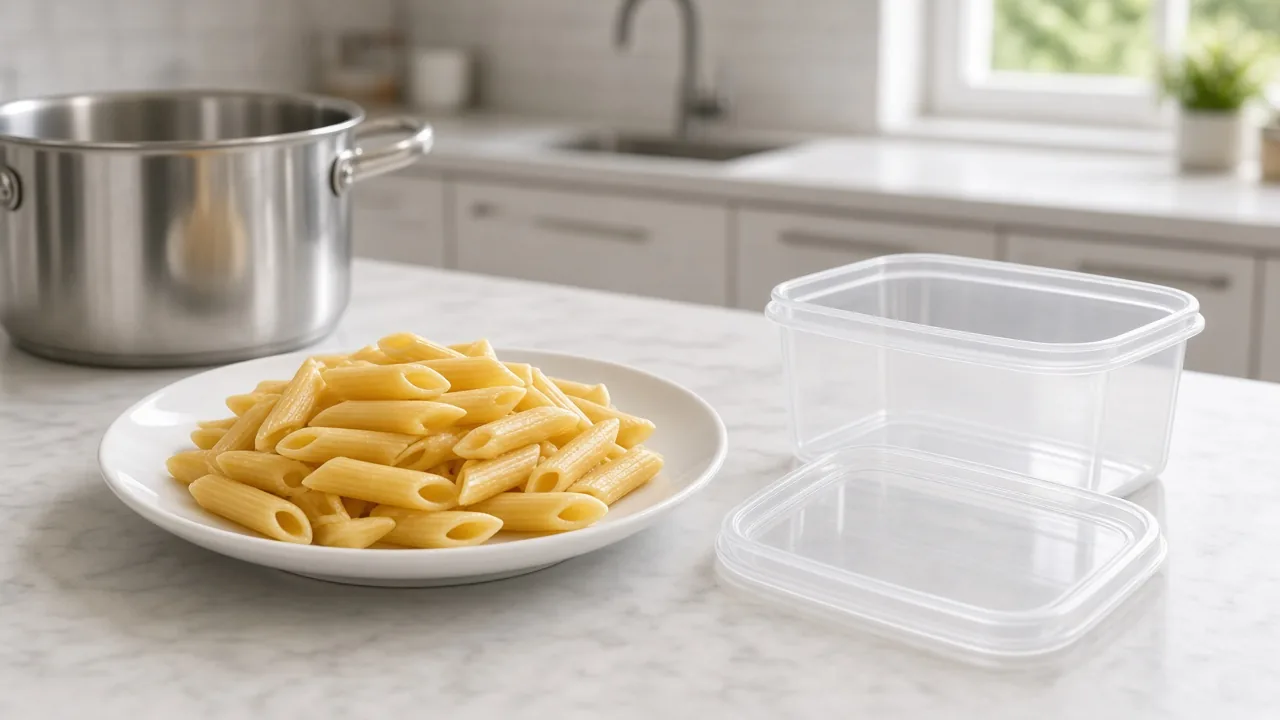
Pasta is a fast weeknight dinner, but two steps decide whether it is both tasty and safe: the cook itself, and what happens after you turn off the heat. According to the USDA Food Safety and Inspection Service (FSIS), leftovers must go into the fridge on time — and starchy foods such as rice and pasta need extra care, as Ohio State University Extension also explains for Bacillus cereus. This article complements our rice in the kitchen and leftovers in the fridge guides without copying their full tables.
Why shape matters
There is no single scientific formula here: at home you match shape to sauce. A common kitchen rule of thumb (culinary practice, not a regulatory standard):
- Short shapes with ridges or tubes (penne, rigatoni, fusilli) — good for chunky vegetable or meat sauces that catch inside the pasta.
- Long strands (spaghetti, linguine, fettuccine) — comfortable with olive oil, garlic, or smoother sauces that coat the strands.
- Soup shapes (orzo, stars) — sit in a bowl without fighting the spoon.
The package is the best source for cook time for that brand and shape.
How to cook pasta at home
Practical steps that work in most kitchens:
- A large pot and plenty of boiling water. Pasta needs room to move; a crowded pot sticks and cooks unevenly.
- Salt the water after it boils. Season to taste — we are not inventing a gram rule without an official source. The water should taste lightly salty before the pasta goes in.
- Time from the package, toward al dente. Check a minute before the printed time. Dry pasta cooked al dente still has a little bite in the center.
- Save a cup of cooking water. The starch helps sauce cling in the pan.
- Do not rinse under cold water when the pasta goes straight into a hot sauce — rinsing washes off starch that helps sauce stick. Rinsing makes more sense for a pasta salad you intentionally cool.
Serve at once, or move straight to safe storage if a large batch remains.
Leftover pasta: the two-hour rule
According to USDA FSIS (“Leftovers and Food Safety”):
- Bacteria grow quickly between about 40°F and 140°F (4°C–60°C) — the “danger zone.”
- Refrigerate leftovers within two hours of cooking or removing from a warmer.
- If the air is above 90°F (about 32°C), that window shortens to one hour.
- Divide into shallow containers so food cools fast; do not leave a giant full pot on the counter.
- Cover or seal, and keep in the fridge 3–4 days, or freeze (USDA: frozen leftovers stay safe indefinitely for safety; quality is often best within about 3–4 months).
- Reheat to 165°F (74°C) in the center, with a food thermometer if you have one.
More on fridge shelf layout in fridge organization for food safety, and on freezing in freezing food at home.
Why pasta and rice need special care
According to an Ohio State University Extension fact sheet on Bacillus cereus, the bacterium and especially its spores are often linked to starchy foods — cooked rice, pasta, potatoes, sauces and casseroles. Spores can survive cooking; if food sits at room temperature too long, bacteria may multiply and produce toxins. Some of those toxins are heat-stable — reheating does not always “fix” leftovers that sat out too long.
The practical takeaway matches USDA guidance: do not leave cooked pasta on the counter “until evening,” cool quickly in shallow containers, and if more than two hours (or one hour in heat) have passed — throw it out. That complements what we wrote about rice in the kitchen without replacing that guide.
Leftover ideas (only if stored safely)
If the pasta reached the fridge on time and is still within 3–4 days:
- A short stir-fry with vegetables and egg (pasta frittata-style).
- A cold pasta salad with olive oil, herbs and vegetables — after full chilling.
- Reheating in sauce until the center hits 74°C / 165°F, not merely “warm to the touch.”
Where KitchenAppes fits
Keep repeating pasta sauces and dishes in one place, with package cook times in the notes. If leftover pasta, tomatoes and cheese are already in the fridge with no plan, Smart Chef can suggest an idea from what you have — after you confirm the leftovers were stored safely.
Sources
- USDA Food Safety and Inspection Service: Leftovers and Food Safety (Last Updated Jul 31, 2020)
- Ohio State University Extension, Ohioline: Bacillus cereus: A Foodborne Illness Confused with the 24-hour Flu
KitchenAppes
Download the app