Rice in Your Kitchen: Types, Cooking and Safe Storage
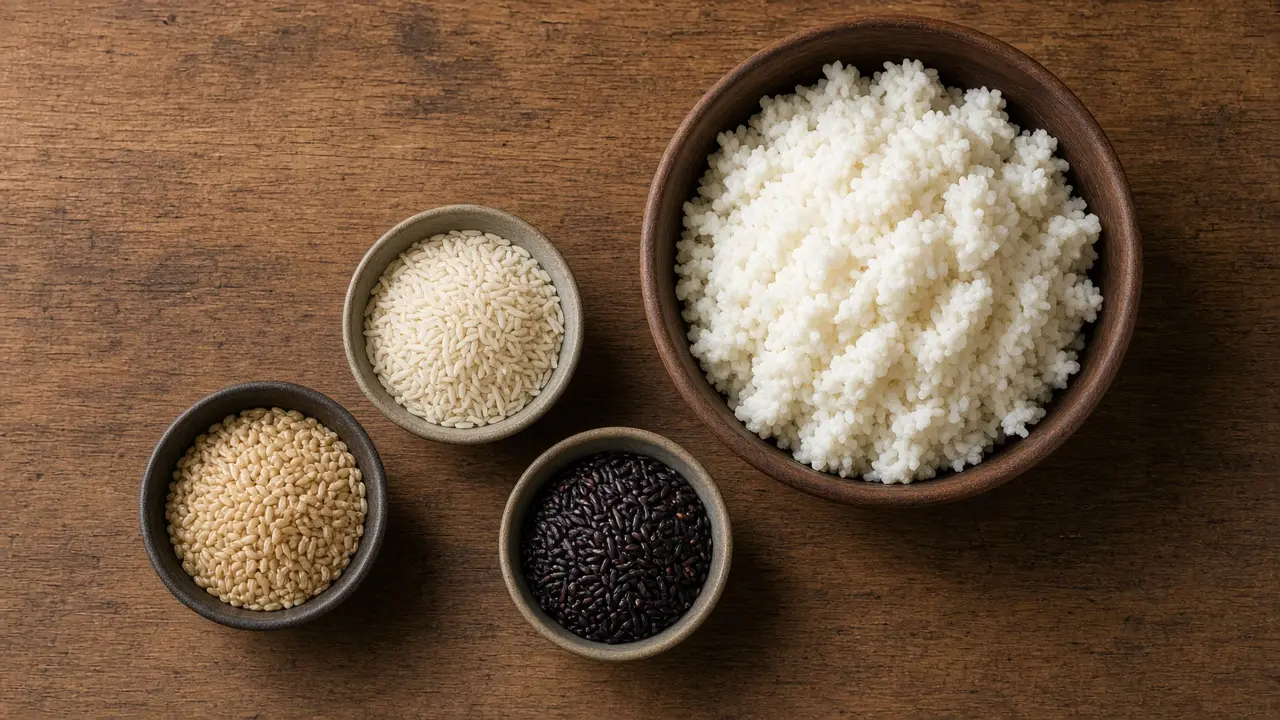
Rice is one of the most basic staples in an Israeli kitchen: next to schnitzel, in mujadara, in stuffed vegetables, in grandma's red rice and in Tuesday's stir-fry. According to the nutrition website of the Harvard T.H. Chan School of Public Health, rice is a main staple in more than 100 countries, and in some households it shows up at more than one meal a day. Precisely because it's so routine, a few things are easy to miss: which type suits which dish, how to cook it without ending up with mush, and what you need to know about the rice left in the pot after dinner.
This is general information, not medical or personal nutrition advice. Pregnant women, infants and toddlers, older adults and people with weakened immune systems are more vulnerable to foodborne illness and to contaminants, and should consult a doctor or a registered dietitian as needed.
Long, medium or short grain
According to Harvard, there are thousands of types of rice (of the species Oryza sativa), differing in size, thickness, stickiness, color, aroma and flavor. The common way to group them is by the shape of the grain after cooking:
- Long grain: the kernel is more than four times as long as it is wide. Cooked, the grains stay separate and fluffy. Examples: jasmine and basmati.
- Medium grain: a shorter, wider kernel that cooks up tender and semi-sticky. Example: Arborio, the risotto rice.
- Short grain: only about twice as long as it is wide, and the stickiest when cooked. Example: "sushi" rice.
Two interesting clarifications from Harvard: "glutinous" rice is named for its glue-like texture, not for gluten, which it does not contain. And wild rice isn't in the same family as Oryza sativa at all; it's actually the seed of a grassy aquatic plant, high in fiber and minerals, with slightly more protein than brown rice.
Brown or white: what's the difference
Whole grain rice keeps all three edible parts of the grain: the bran, the germ and the endosperm. "Brown" doesn't describe a particular variety but the natural color of the grain, and whole grain rice also comes in black, purple and red. According to Harvard, because the bran and germ remain intact, whole grain rice usually takes longer to cook and has a nuttier, chewier texture.
White rice is milled and polished to remove the bran and germ, leaving mainly the starchy endosperm. The process removes most of the naturally occurring B vitamins, minerals, fiber and plant compounds. "Enriched" rice has B vitamins and iron added back, but according to Harvard, only a fraction of the original amount.
Harvard also mentions the glycemic index (GI), which measures how quickly and how much a food raises blood sugar: the average GI of brown rice is 55 (low), while white rice averages 64. The general public health advice, Harvard notes, is to replace refined grains with whole grains. More in our guide to whole grains.
How to cook rice, step by step
Harvard's general guidelines (always check the package directions too, since each type needs its own amount of water and cooking time):
- Rinse. Before cooking, rinse rice in cool water until it runs clear, to remove excess starch. For rice from bulk bins, rinsing also removes dust. Note that excessive rinsing may wash away some B vitamins, especially in enriched white rice, where the vitamins are sprayed onto the surface of the grain.
- Soak, if you like. Soaking reduces cooking time and stickiness.
- Water ratio. As a general rule, 2 cups of water per 1 cup of rice. Need to convert cups to grams? See how many grams are in a cup.
- Cook. Bring the water to a boil, add the rice and stir, cover and reduce the heat to low-medium. Simmer about 20 minutes for white rice and 40–45 minutes for brown rice and other minimally processed varieties.
- Let it rest. Remove from the heat and leave covered for 5–10 minutes, then gently fluff the grains with a fork.
- Flavor. Cook in vegetable or chicken broth instead of water, or add spices to the cooking water. Stir fresh chopped herbs such as parsley, dill or chives into the rice after you take it off the heat, while it's still steaming in the pot.
Making risotto? According to Harvard, Arborio is cooked differently: the liquid is added gradually, in portions, with constant stirring, which gives a creamy texture without the rice turning mushy.
What about arsenic in rice?
Arsenic is a heavy metal found naturally in soil, rock and water. According to Harvard, arsenic accumulates in rice 10 times more than in other grains, because rice grows in flooded fields where both the irrigation water and the soil may contain arsenic. Brown rice has more arsenic than white, since the metal accumulates in the outer layers of the grain. Even so, Harvard does not recommend switching to white rice as a staple, because of its lesser health benefits.
What you can do, according to Harvard:
- Cook it in plenty of water. Wash the rice well, cook it in extra water (for example 6–10 cups of water per cup of rice, as suggested by the FDA), drain the excess water after cooking, and rinse once more. This removes about 50% of the arsenic, but also some of the water-soluble B vitamins.
- Vary your grains. Mix in other whole grains that are lower in arsenic, such as amaranth, bulgur, wheat berries, millet and quinoa.
- For infants and toddlers: according to Harvard, the FDA advised parents to give infants a variety of fortified cereals other than rice, such as oat, barley and multigrain, and pregnant women and toddlers should also eat a variety of whole grains, not just rice.
Storing cooked rice safely
This is the part most people don't know about. According to the Western Australia Department of Health (HealthyWA), uncooked rice often contains the bacterium *Bacillus cereus*. It forms protective spores that survive cooking, and if the rice cools slowly and sits between 5°C and 60°C for a long time, the spores can germinate, grow and produce a toxin that causes vomiting. The Singapore Food Agency (SFA) and the U.S. FDA note that this toxin is heat-resistant and not easily destroyed by cooking, so reheating doesn't necessarily help. And one more important point from HealthyWA: there's no way to tell by look, taste or smell whether the rice is contaminated.
What to do, according to HealthyWA, the SFA, FoodSafety.gov and the USDA Food Safety and Inspection Service (FSIS):
- Cook only what you need. If you have to cook ahead, don't cook more than you need at one time.
- Hot or cold, not in between. Either keep cooked rice hot, above 60°C, or cool it as quickly as possible and refrigerate it. HealthyWA refers to a fridge below 5°C; the SFA and the USDA to 4°C (40°F) or below.
- Cool it properly. Take the rice out of the hot pot and divide it into smaller, clean, shallow containers less than 10 cm deep, and don't stack them. Alternatively, cool the rice in a colander under cold running water before refrigerating it.
- The two-hour rule. According to the USDA, leftovers must be refrigerated within 2 hours of cooking, and perishable food left at room temperature for more than 2 hours (or more than 1 hour when it's above 32°C / 90°F, as on a hot summer day) should be thrown away.
- How long in the fridge. For leftovers in general, the USDA gives 3–4 days in the fridge or 3–4 months in the freezer. With rice, it's better not to push the limit, since, as noted above, you can't spot a problem by eye or nose.
- Reheat all the way. The USDA recommends reheating leftovers to 74°C (165°F), and the SFA advises cooking fried rice to at least 75°C throughout. In the microwave: cover, rotate the dish for even heating, and check the temperature in several places, because microwaves have cold spots. Heat kills bacteria but not the toxin, so quick cooling is what matters most.
More on the general rules in our guides to leftovers in the fridge and weekly meal prep.
What to do with leftover rice
Harvard offers a few simple ideas for cooked rice that has been stored properly:
- Stir-fry: sauté chopped vegetables with cooked chicken or tofu in a pan, then add the rice and stir well.
- In soup: add a cup of cooked rice to turn a soup into a more filling meal.
- In salad: toss a handful of cooked rice into a vegetable salad.
- Quick vegan bowl: one cup of cooked rice, half a cup of cooked beans, half a cup of salsa and a handful of greens.
And if your fridge holds some rice and a few other bits with no clear plan, try our method for a recipe from what you have at home.
Where KitchenAppes comes in
In KitchenAppes you can find rice dishes, mujadara, stews and stir-fries, and keep your favorite recipes in one place. And if there's a container of yesterday's rice, a few vegetables and an egg in the fridge, Smart Chef can suggest a recipe from the ingredients you already have at home.
Sources
- Harvard T.H. Chan School of Public Health, The Nutrition Source: Rice
- HealthyWA, Government of Western Australia Department of Health: Safe cooling of cooked rice
- Singapore Food Agency (SFA): Fried Rice Syndrome
- USDA Food Safety and Inspection Service: Leftovers and Food Safety
- FoodSafety.gov (U.S. HHS): Bacteria and Viruses: Bacillus cereus
- U.S. Food and Drug Administration (FDA): Bad Bug Book, 2nd ed.: Bacillus cereus
KitchenAppes
Download the app