Weekly meal prep: plan, cook ahead and store food safely
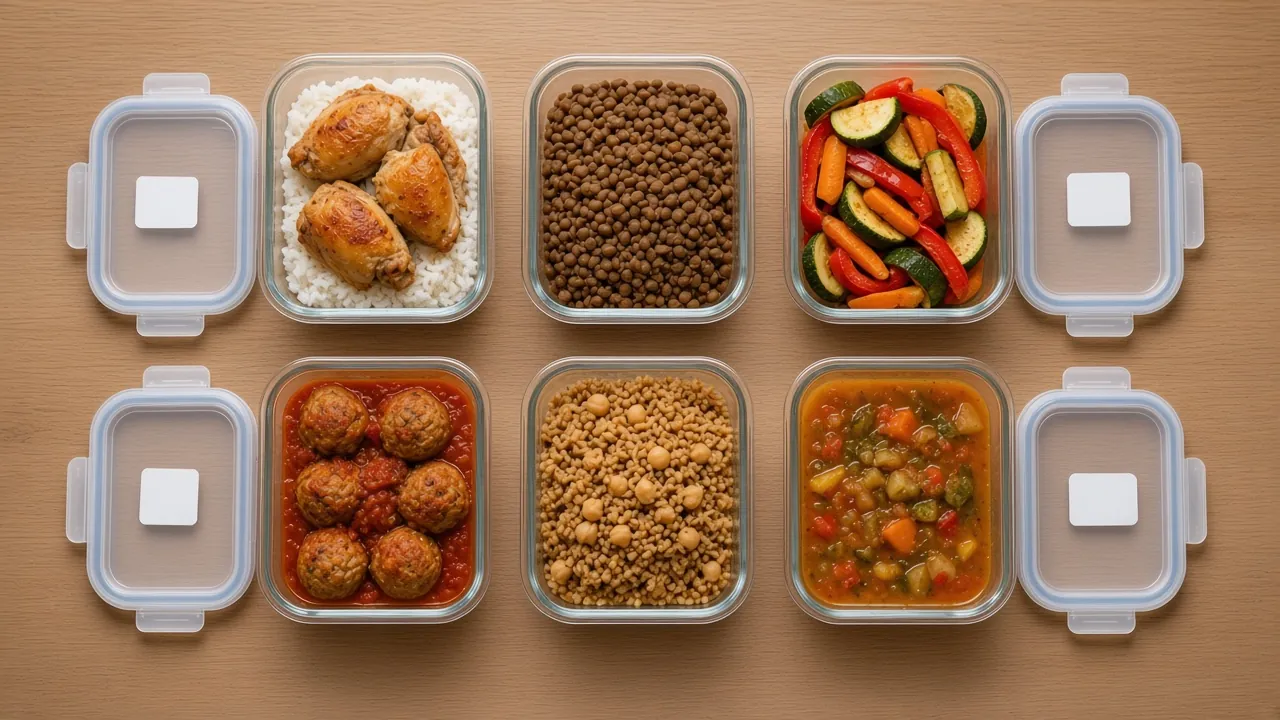
A typical weeknight: you get home late, everyone is hungry, and nobody has the energy to start chopping onions. That's exactly what meal prep is for: you set aside two or three hours on one day and get several ready meals for the days ahead. It saves time, money and food waste, but there's a side that's easy to forget: food cooked in advance has to be cooled, stored and reheated the right way. In this article we go through planning, the cooking itself and the safety rules, based on guidance from the USDA Food Safety and Inspection Service (FSIS) and the FoodSafety.gov storage chart.
This is general information. Pregnant women, babies, older adults and people with weakened immune systems are more vulnerable to foodborne illness, so they should be especially careful and consult a professional when needed.
Step 1: Plan before you turn on the stove
- Pick a cooking day. For many families it's the weekend, Saturday night or Sunday. Food cooked on Sunday comfortably covers you through Wednesday.
- Think in building blocks, not dishes. Instead of five complete meals, make a few "bases" that mix and match: a grain or legume (rice, bulgur, lentils), a protein (oven-baked chicken, meatballs, cooked chickpeas), roasted vegetables and one or two sauces.
- Decide what goes in the fridge and what goes in the freezer. Portions for the first few days go in the fridge. Portions for the end of the week go into the freezer on cooking day.
- One shopping list. Once the menu is clear, it's easy to buy exactly what you need. If you'd like help building the week, see our weekly family menu guide.
Step 2: Batch cook it right from the start
According to the USDA, the first step to safe leftovers is cooking food safely. It's worth checking with a food thermometer:
- Chicken and turkey: 74°C (165°F) inside.
- Ground meat (beef, lamb, veal): 71°C (160°F).
- Whole cuts of red meat: 63°C (145°F), then let the meat rest for at least three minutes before carving.
If you're not sure which thermometer to buy, read our MEATER Pro thermometer review.
Step 3: Cool it fast, the most important step
Bacteria grow rapidly between 4°C and 60°C (40°F to 140°F), a range known as the "danger zone." That's why the USDA recommends:
- Refrigerate within 2 hours of cooking, or within 1 hour on a hot day above 32°C (90°F). Throw away perishable food that has been left out longer than that.
- Divide into shallow containers. A big pot of soup takes a long time to cool. Split it into several smaller containers, and slice or cut large pieces of meat into smaller portions.
- Don't wait for food to reach room temperature. According to the USDA, hot food can go straight into the fridge, or be chilled quickly first in an ice or cold water bath.
- Seal it well. A tight lid or airtight wrapping keeps moisture in, keeps bacteria out and stops food from picking up odors.
Step 4: How long it keeps
Your fridge should be at 4°C (40°F) or below and your freezer at -18°C (0°F) or below. According to the USDA and FoodSafety.gov:
| Food | Fridge | Freezer |
|---|---|---|
| Cooked leftovers in general | 3–4 days | 3–4 months |
| Soups and stews with vegetables or meat | 3–4 days | 2–3 months |
| Cooked meat or poultry | 3–4 days | 2–6 months |
| Egg, chicken, tuna or macaroni salad | 3–4 days | Doesn't freeze well |
| Raw chicken or raw ground meat | 1–2 days | Ground meat 3–4 months; chicken pieces 9 months |
Two important points: freezer times are for quality only, because food kept continuously at -18°C is safe indefinitely, but over time it dries out and loses flavor. Which leads to a simple rule: label every container with what's in it and the date it was cooked. For more on storage times, read our article on leftovers in the fridge.
Step 5: Thawing and reheating
- Thawing: the safest, slowest way is in the fridge, after which the food keeps for another 3–4 days. You can also thaw in cold water in a leak-proof bag, or in the microwave and then heat it all the way right away. Details in our guide to thawing safely.
- Without thawing: according to the USDA, it's safe to reheat a frozen portion directly in a pot, the oven or the microwave. It takes longer, but it's safe.
- Heat it all the way: reheat leftovers to 74°C (165°F). Bring sauces, soups and gravies to a rolling boil.
- In the microwave: cover, stir or rotate halfway through, and check the temperature in several places, because microwaves have cold spots.
- Refreezing: according to the USDA, leftovers reheated to 74°C can be frozen again. And if you thawed a large container in the fridge and only need part of it, you can return the rest to the freezer without reheating.
Where KitchenAppes comes in
In KitchenAppes you can keep the recipes that work well for cooking ahead in one place and plan your week around them in the KitchenAppes cookbook. And on Wednesday, when the fridge holds a bit of rice, half a tray of roasted vegetables and two meatballs, Smart Chef can suggest how to turn them into a new meal.
Sources
- USDA Food Safety and Inspection Service: Leftovers and Food Safety
- FoodSafety.gov: Cold Food Storage Chart
- USDA FSIS: Safe Minimum Internal Temperature Chart
KitchenAppes
Download the app