Whole Grains vs. Refined Grains: How to Tell Them Apart
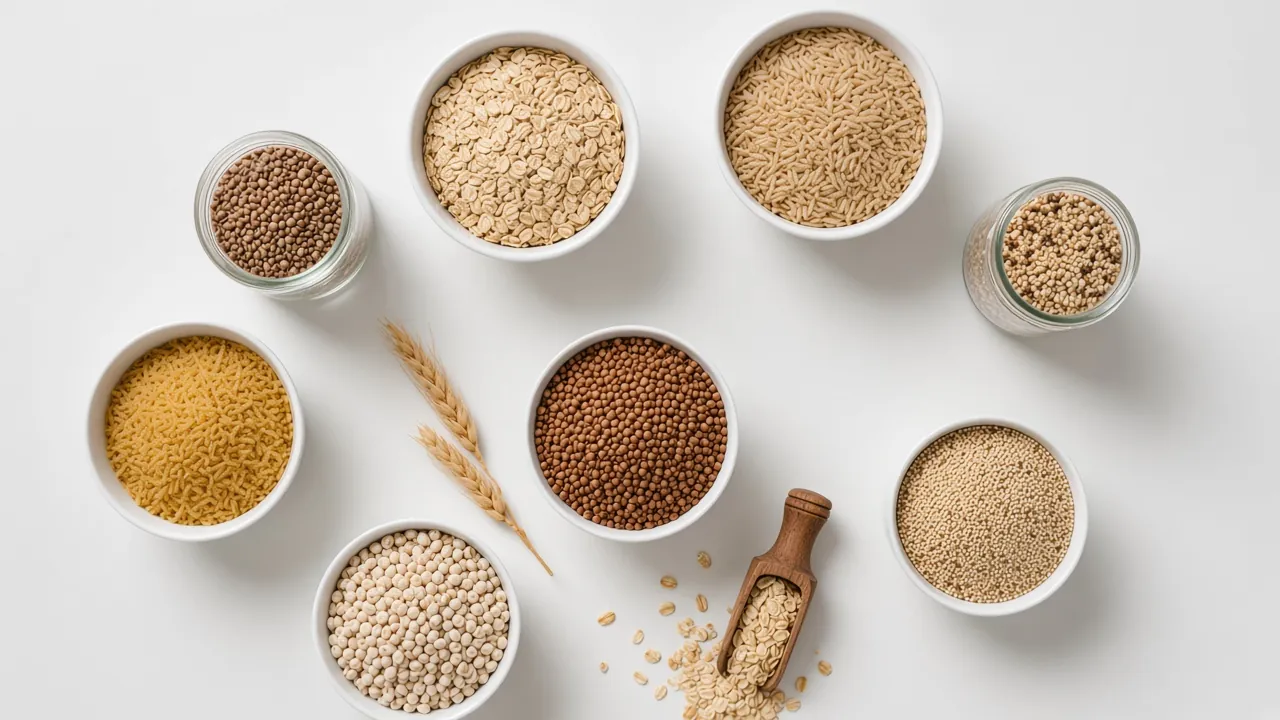
Rice, bread, pasta and oats show up in almost every meal. But "brown bread" on the shelf doesn't always mean "whole grain", and "made with whole grains" can mean almost anything. In this article we'll explain what a whole kernel contains, what gets lost during refining, and how to choose a good product without turning every shopping trip into a research project.
This is general information, not medical advice. If you have a medical condition, celiac disease, a sensitive digestive system or personal dietary instructions, follow your doctor or dietitian.
The three parts of a kernel
According to the Harvard T.H. Chan School of Public Health's nutrition site, The Nutrition Source, every whole grain kernel has three parts:
- Bran: the fiber-rich outer layer. It supplies B vitamins, iron, copper, zinc, magnesium, antioxidants and plant compounds (phytochemicals).
- Germ: the core of the seed, where growth begins. It is rich in healthy fats, vitamin E, B vitamins and antioxidants.
- Endosperm: the inner layer, holding mostly carbohydrates, some protein and small amounts of vitamins and minerals.
A whole grain keeps all three parts. A refined grain keeps mainly the endosperm.
What refining removes
Harvard explains that the industrial roller mills of the late 19th century changed how grains are processed: the bran and germ are stripped away, leaving the soft endosperm. The germ is removed partly because its fat shortens the shelf life of wheat products.
The result is fluffy white flour that makes light breads and pastries. But according to the same source, refining wheat removes more than half of its B vitamins, about 90% of its vitamin E and virtually all of its fiber. Some nutrients are added back through fortification, but not everything in the whole kernel can be replaced that way.
Another point from the source: bran and fiber slow the breakdown of starch into glucose, and fiber is also linked to lower cholesterol and healthy digestion.
How much is recommended
The current Dietary Guidelines for Americans (2025–2030) recommend 2–4 servings of whole grains a day on a 2,000-calorie pattern, adjusted to your needs. A serving is, for example, one slice of whole-grain bread or ½ cup of cooked brown rice, barley, quinoa or buckwheat. Harvard likewise advises choosing mostly whole grains over refined ones.
How to spot a whole grain at the store
This is the practical part, and it comes down to two simple checks:
- The ingredient list: Harvard says an easy way to tell that a product is high in whole grains is to make sure a whole grain is listed first or second. Plain "wheat flour" is usually white flour; look for "whole wheat flour", "whole oats" and similar wording.
- The carb-to-fiber ratio: in a study Harvard describes, out of several ways to identify "whole grain" products, a ratio of less than 10 grams of carbohydrate per gram of fiber was the most effective measure of healthfulness: products meeting it had more fiber and less sugar, sodium and trans fat. In practice: divide the carbohydrates by the fiber on the nutrition label. If the result is under 10, that's a good sign.
Harvard also warns that a "whole grain" label doesn't always mean a product is healthy: in the same study, products with the Whole Grain Stamp had more fiber but also more sugar and calories.
Whole grains worth knowing
Harvard's list includes, among others: oats, brown rice, bulgur, buckwheat, barley, quinoa, spelt, rye, millet, corn, teff and wild rice. Many of them are in every supermarket, and you don't need to buy them all.
6 easy ways to add them to your menu
- Breakfast: oatmeal instead of sweetened breakfast cereal.
- Half and half: white and brown rice in the same pot (cook for the brown rice's time), or half regular and half whole wheat pasta.
- Bulgur and buckwheat: they cook relatively fast and work as a side dish or a salad base.
- Barley in soup: add a handful of whole (hulled) barley, not pearl barley, to vegetable or lentil soup.
- Baking: replace part of the white flour with whole wheat flour. The dough will be a bit denser, so start with a quarter or a third.
- Cook ahead: make a big batch at the start of the week and portion it into meals. Our weekly family menu guide shows how to plan the week around it.
How KitchenAppes helps
In KitchenAppes you can save recipes with bulgur, buckwheat or brown rice and build a weekly menu and shopping list from them. If there's a bag of buckwheat at home and you're not sure what to do with it, Smart Chef can suggest a recipe from the ingredients you already have. Converting a cup of grain to grams? See how many grams are in a cup.
Sources
- Harvard T.H. Chan School of Public Health, The Nutrition Source: Whole Grains
- Dietary Guidelines for Americans, 2025–2030: Dietary Guidelines (PDF), Daily Serving Sizes (PDF)
KitchenAppes
Download the app