Freezing Food at Home: What Freezes Well, How Long It Keeps
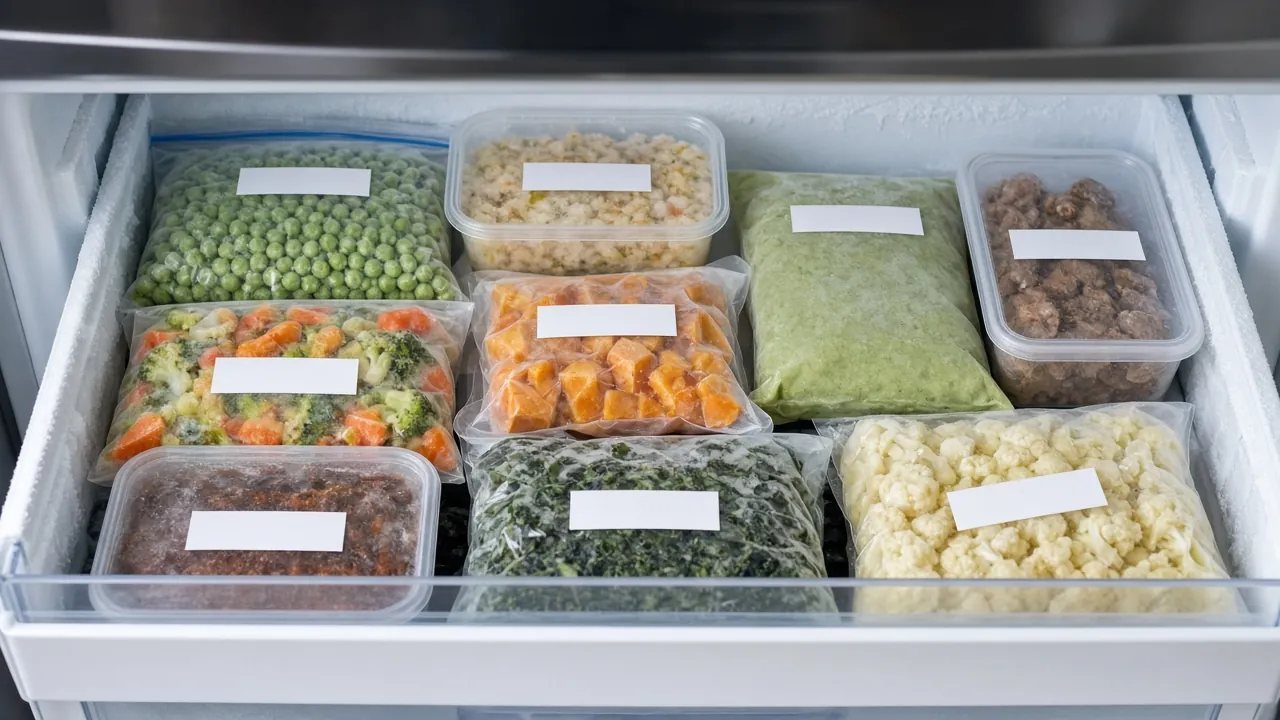
The freezer is one of the most useful tools in the kitchen: it cuts food waste, lets you cook once and eat several times, and keeps supermarket deals for the weeks ahead. But not everything that goes into the freezer comes out well. According to the USDA Food Safety and Inspection Service (FSIS), you can freeze almost any food, but being able to freeze it and being pleased with the quality after defrosting are two different things. This guide explains what happens to food in the freezer, what freezes well and what doesn't, how to blanch vegetables, how to pack and label, how long quality lasts, and how to thaw safely.
Why -18°C (0°F)
According to FoodSafety.gov, food stored continuously at 0°F (-18°C) or below stays safe indefinitely. According to FSIS, freezing doesn't kill bacteria, yeasts and molds; it makes them dormant. Once food thaws they can become active again and multiply at about the same rate as on fresh food, so thawed food should be handled like any perishable food.
A few more key points from FSIS:
- Safety holds, quality fades. Recommended freezer times are about taste and texture, not safety.
- Freezing doesn't destroy nutrients. In meat and poultry there's little change in nutrient value during freezer storage.
- Enzymes only slow down. Freezing doesn't stop them completely, which is why vegetables are blanched before freezing (more on that below).
- A thermometer for the freezer. FSIS recommends keeping an appliance thermometer in the freezer to make sure it really holds -18°C, and checking that the fridge is at 4°C (40°F) or below. A freezer compartment that can't hold the temperature, or that's opened often, is only suitable for short-term storage.
- Freeze fast. According to FSIS, slow freezing creates large ice crystals that damage cells, which is why meat "drips" and loses juiciness after thawing. Food 5 cm (2 inches) thick should freeze completely in about 2 hours. Spread new packages in a single layer and don't stack them until they're frozen solid.
What freezes well and what doesn't
According to FSIS, you can freeze almost anything. The main exceptions are canned food still in the can and eggs in their shells. Raw meat and poultry keep their quality longer than cooked, because cooking removes moisture.
What doesn't freeze well, according to FSIS, FoodSafety.gov and the University of Georgia's National Center for Home Food Preservation (NCHFP):
- Raw salad vegetables: lettuce, cucumbers, cabbage, celery, radishes and parsley come out limp, waterlogged and off in color and flavor. (Cabbage and cucumbers can be frozen as marinated products, but the texture is different.)
- Sauces and emulsions: mayonnaise and cream sauce separate, milk sauces may curdle or separate, and sour cream turns watery.
- Eggs: don't freeze eggs in the shell or hard-cooked eggs. Cooked egg whites turn rubbery. According to FoodSafety.gov, you can freeze raw eggs if you beat the yolks and whites together.
- Prepared salads: egg, tuna, chicken and macaroni salads don't freeze well.
- Cooked or baked potatoes, and pasta or rice cooked and frozen on their own: they come out soft, mealy or "warmed over." Inside a stew or soup they usually do better.
- Cream and custard fillings, meringue and gelatin: they separate, weep or turn rubbery.
- Fried foods: lose their crispness (except French fries and onion rings, according to NCHFP).
And seasonings: according to NCHFP, pepper, cloves, garlic and some herbs get strong and bitter in the freezer, onion and ground sweet red pepper change flavor, and salt loses flavor. Their advice: season lightly before freezing and add more when reheating or serving.
Blanching vegetables before freezing
According to NCHFP, blanching, a short scald in boiling water or steam, is a must for almost all vegetables you freeze. It stops the enzymes that cause loss of flavor, color and texture, cleans dirt and microorganisms off the surface, brightens color and slows vitamin loss. Underblanching is worse than not blanching at all, because it stimulates the enzymes, while overblanching costs flavor, color and vitamins.
How to do it, according to NCHFP:
- Water: about one gallon of water per pound of vegetables, roughly 8 liters per kilo. Lower the vegetables in a basket into vigorously boiling water and cover.
- Time from the boil: the water should return to a boil within 1 minute; if it doesn't, there are too many vegetables for the amount of water. Start counting when the water boils again.
- Cool fast: straight into a large bowl of cold water, 16°C (60°F) or below, or ice water (about as much ice as vegetables by weight). Cooling should take as long as blanching.
- Drain: drain well. Extra moisture lowers quality in the freezer.
Some boiling-water blanching times from the NCHFP table (in minutes):
| Vegetable | Blanching time |
|---|---|
| Broccoli (florets about 4 cm across) | 3 (steamed: 5) |
| Cauliflower (florets about 2.5 cm across) | 3 |
| Green beans | 3 |
| Carrots, diced or sliced | 2 |
| Green peas | 1½ |
| Sweet peppers, halves / strips | 3 / 2 |
| Zucchini (summer squash) | 3 |
| Eggplant | 4 |
| Cabbage, shredded | 1½ |
| Leafy greens (except collards) | 2 |
| Pumpkin, sweet potatoes, winter squash | cook fully |
According to NCHFP, steam blanching takes about 1½ times longer than water blanching, and microwave blanching may not inactivate all the enzymes and doesn't save time or energy.
Packing, labeling and freezer burn
Freezer burn shows up as grayish-brown, leathery dry spots on frozen food. According to FSIS, it's caused by air reaching the surface of the food, and it doesn't make food unsafe, only dry in spots. Cut the affected parts away before or after cooking. Heavily freezer-burned food may need to be thrown out for quality reasons.
How to pack, according to FSIS and NCHFP:
- Cool food before packing. This speeds freezing and preserves color, flavor and texture.
- Squeeze out as much air as possible and pack tightly.
- Leave headspace in rigid containers, because food expands as it freezes. Loosely packed vegetables, bony pieces of meat and bread don't need it.
- Seal well: a tight lid, with no food or moisture on the sealing edge.
- Store packaging: according to FSIS, it's safe to freeze meat and poultry in the original packaging, but that wrap lets air through. For longer storage, overwrap it. Freeze unopened vacuum packs as they are. There's no need to rinse meat or poultry before freezing.
- One-meal portions. That way you only thaw what you need.
Labels: according to NCHFP, write on every package the name of the food, any added ingredients, the packing date, the number of servings or amount, and the form (whole, sliced, ground). Use markers and labels made for freezer use. It also tells you what to use first.
How long quality lasts in the freezer
These times are for quality only, in a freezer at -18°C. According to FSIS, food kept continuously at that temperature stays safe beyond these times, but taste and texture suffer. According to FSIS and FoodSafety.gov (in months): (For cooked meat and poultry, FoodSafety.gov gives a wider range of 2–6 months; we use FSIS's more conservative times here.)
| Food | Months in the freezer |
|---|---|
| Raw ground meat (beef, chicken, turkey) | 3–4 |
| Raw steaks and chops (beef, veal, lamb) | 4–12 |
| Raw roasts | 4–12 |
| Raw whole chicken or turkey | 12 |
| Raw chicken or turkey pieces | 9 |
| Cooked meat | 2–3 |
| Cooked poultry | 4 |
| Soups and stews | 2–3 |
| Casseroles | 2–3 |
| Frozen dinners and entrees | 3–4 |
| Fatty fish (salmon, tuna, mackerel) | 2–3 |
| Lean fish (cod, sole, halibut) | 6–8 |
| Egg whites | 12 |
| Pizza (leftovers) | 1–2 |
According to FSIS, if a food isn't on the chart, judge its quality after thawing. Smell it first: food frozen too long can develop a rancid or off odor and should be thrown out. Food that doesn't look its best but is still edible works well in soups or stews. And according to FSIS, freeze leftovers within 3–4 days. More on leftovers in our guide to leftovers in the fridge.
Safe thawing and refreezing
According to FSIS, never thaw food on the kitchen counter, outdoors, in the garage, basement, car, dishwasher or a garbage bag. There are three safe ways:
- In the fridge: the safest, but it takes planning. Small items may thaw overnight, most foods need a day or two, and a whole turkey needs about one day per 5 pounds (about 2.3 kg).
- In cold water: in a leak-proof bag submerged in cold water. Change the water every 30 minutes and cook right after thawing.
- In the microwave: cook immediately after thawing, because some parts of the food may get warm and start to cook.
You can also cook or reheat meat, poultry and casseroles straight from frozen. According to FSIS, it takes about 1½ times as long. Details on each method and common mistakes in our article on thawing meat and poultry safely.
When you can refreeze, according to FSIS:
- Food thawed in the fridge can be refrozen without cooking, although quality may suffer from the moisture lost in thawing.
- Raw food that was frozen, thawed and then cooked can be frozen after cooking.
- Cooked food thawed in the fridge: you can refreeze the portion you didn't use.
- Don't refreeze food that was left out of the fridge for more than 2 hours, or more than 1 hour above 32°C (90°F).
And after a power outage: according to FSIS, a full freezer usually keeps food about 2 days if the door stays shut, a half-full one about a day. Food that still has ice crystals or is as cold as in a fridge (4°C) can be refrozen or used. Throw out food that has been above 4°C for more than 2 hours.
Where KitchenAppes fits in
In KitchenAppes you can keep the soups, stews and patties you cook in big batches and freeze in one place, so the recipe is ready next time. You can list everything you need for a big cooking day on a shopping list ahead of time. And if the freezer holds chicken breast, peas and some broccoli with no clear plan, Smart Chef can suggest a recipe from the ingredients you already have. Ideas for planning a day like that in our guide to cooking ahead for the week.
Sources
- USDA Food Safety and Inspection Service: Freezing and Food Safety
- FoodSafety.gov (U.S. Department of Health and Human Services): Cold Food Storage Chart
- National Center for Home Food Preservation (University of Georgia): Blanching Vegetables
- National Center for Home Food Preservation: Foods That Do Not Freeze Well
- National Center for Home Food Preservation: Packaging and Labeling Foods
KitchenAppes
Download the app