Magnesium in the Kitchen: Daily Needs and Food Sources
This is general information, not personal medical or nutrition advice. Magnesium needs vary by age, sex, pregnancy, lactation and health status. Talk to a doctor before taking a supplement — especially at high doses. Magnesium from food is generally not harmful for healthy people; excess from supplements or medicines can cause diarrhea, nausea and abdominal cramping, and extreme intakes can affect heart rhythm.
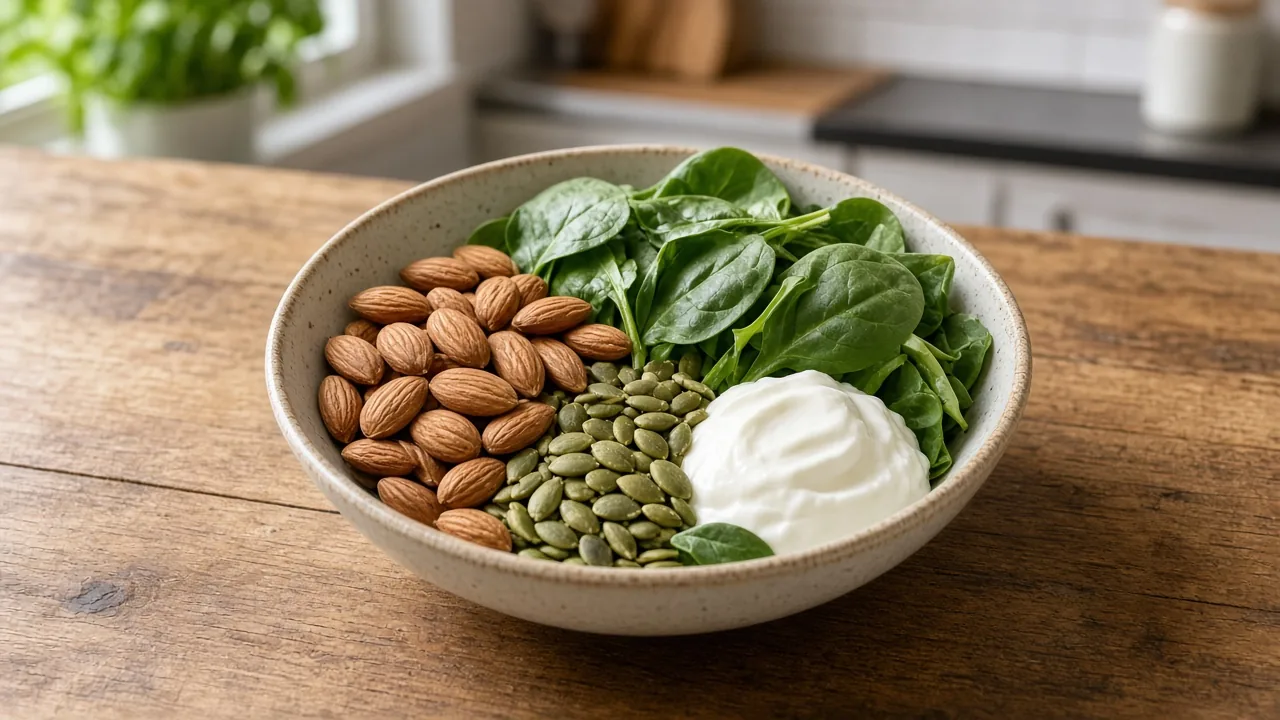
Magnesium shows up in the kitchen more often than people notice: almonds, spinach, black beans, pumpkin seeds. According to the NIH Office of Dietary Supplements (ODS), it supports many body processes — from muscle and nerve function to making protein, bone and DNA. This article covers what it does, how much is recommended, which foods provide it, when supplements need caution, and how it fits a home menu — without medical promises.
What magnesium does
According to the NIH ODS consumer fact sheet, magnesium helps regulate muscle and nerve function, blood sugar and blood pressure, and is used to make protein, bone and DNA. The health professional sheet adds that it is a cofactor in more than 300 enzyme systems, supports energy production, and helps move calcium and potassium across cell membranes — important for a normal heart rhythm.
An adult body holds about 25 grams of magnesium, mostly in bone and soft tissue. Less than 1% is in blood serum, and the kidneys help keep levels steady. Serum tests alone do not always reflect total body stores — so a random online “deficiency check” is not a substitute for a clinician.
How much magnesium you need
Recommended daily amounts from the NIH ODS consumer sheet, in milligrams. For infants through 12 months these are Adequate Intakes (AI):
| Life stage | Recommended amount per day |
|---|---|
| Birth to 6 months | 30 mg (AI) |
| Infants 7–12 months | 75 mg (AI) |
| Children 1–3 years | 80 mg |
| Children 4–8 years | 130 mg |
| Children 9–13 years | 240 mg |
| Teen boys 14–18 | 410 mg |
| Teen girls 14–18 | 360 mg |
| Men | 400–420 mg |
| Women | 310–320 mg |
| Pregnant teens | 400 mg |
| Pregnant women | 350–360 mg |
| Breastfeeding teens | 360 mg |
| Breastfeeding women | 310–320 mg |
According to NIH ODS, many U.S. diets provide less than recommended amounts from food alone — especially men over 70 and teenagers. When supplements are counted, total intakes often rise above recommended levels. That does not mean everyone needs a pill; it means checking the plate before buying a bottle.
Upper limit — supplements and medicines only
Magnesium naturally present in food and drinks does not need an upper limit for healthy people; the kidneys excrete the excess. The Tolerable Upper Intake Level (UL) from NIH ODS applies only to magnesium from dietary supplements and medications (for example some laxatives or antacids):
| Age | Upper limit from supplements/medicines per day |
|---|---|
| Children 1–3 | 65 mg |
| Children 4–8 | 110 mg |
| Age 9 and adults | 350 mg |
No UL is set for infants under one year. High supplemental intakes can cause diarrhea, nausea and cramping; extremely high intakes can lead to irregular heartbeat and cardiac arrest. Impaired kidney function raises risk — only with a doctor.
Where magnesium shows up in the kitchen
Good sources per NIH ODS include legumes, nuts, seeds, whole grains and green leafy vegetables such as spinach. Fortified foods and some dairy products also contribute. About 30%–40% of dietary magnesium is absorbed. Refining grains in ways that remove the germ and bran substantially lowers magnesium — another reason to prefer whole grains.
Selected examples from Table 2 of the NIH ODS health professional sheet (kosher-friendly choices):
| Food | Magnesium per serving |
|---|---|
| Pumpkin seeds, roasted, 1 ounce | 156 mg |
| Chia seeds, 1 ounce | 111 mg |
| Almonds, dry roasted, 1 ounce | 80 mg |
| Spinach, boiled, ½ cup | 78 mg |
| Cashews, dry roasted, 1 ounce | 74 mg |
| Black beans, cooked, ½ cup | 60 mg |
| Edamame, shelled, cooked, ½ cup | 50 mg |
| Peanut butter, smooth, 2 tablespoons | 49 mg |
| Potato, baked with skin, 3.5 ounces | 43 mg |
| Brown rice, cooked, ½ cup | 42 mg |
| Yogurt, plain, low fat, 8 ounces | 42 mg |
| Banana, 1 medium | 32 mg |
| Milk, 1 cup | 27 mg |
| Avocado, cubed, ½ cup | 22 mg |
More on legumes in our legumes at home guide, and on daily produce in vegetables and fruit.
Research notes — carefully, without promises
Scientists study links between magnesium and blood pressure, type 2 diabetes, bone density and migraine. Per NIH ODS:
- Blood pressure: supplements may lower it only a little; food studies are hard to separate from other nutrients.
- Type 2 diabetes: higher dietary magnesium is associated with lower risk in cohort studies; there is not enough evidence to recommend supplements for glycemic control in people who already have diabetes (American Diabetes Association as cited by NIH).
- Bones: magnesium matters for bone health; more research is needed on supplements.
- Migraine: some small trials found modest reductions in frequency; doses often exceed the UL — only under a clinician’s care.
We do not claim magnesium “cures” disease or replaces treatment.
Who may get too little
According to NIH ODS, overt deficiency from food alone is uncommon in healthy people because the kidneys conserve magnesium. Groups at higher risk include people with certain gastrointestinal diseases, type 2 diabetes, long-term alcoholism, and older adults. Early symptoms can include loss of appetite, nausea, fatigue and weakness. Diagnosis and treatment belong with a doctor.
Supplements and interactions — no product advice
Per NIH ODS, forms that dissolve well tend to absorb better; aspartate, citrate, lactate and chloride are generally more bioavailable than oxide or sulfate. Magnesium also appears in some laxatives and antacids.
Possible interactions (examples from NIH ODS): oral bisphosphonates, certain antibiotics, diuretics, long-term proton pump inhibitors, and very high zinc doses. Tell your doctor and pharmacist about every supplement and medicine. We do not recommend a product, dose or brand.
Meal ideas
General KitchenAppes ideas, not a medical menu:
- Spinach salad with almonds: fresh or briefly wilted spinach, chopped almonds, olive oil and lemon.
- Black bean and brown rice bowl: half a cup of beans plus half a cup of brown rice.
- Pumpkin seeds with yogurt: a small handful of seeds beside plain yogurt.
See also protein in everyday cooking and calcium in the daily menu.
Where KitchenAppes fits
Save the salads, legumes and nutty dishes you repeat in one place. If spinach, almonds and beans are already in the kitchen with no plan, Smart Chef can suggest a recipe from what you have — and our related guides above help you build the plate.
Sources
- NIH Office of Dietary Supplements: Magnesium — Fact Sheet for Consumers (Updated March 22, 2021)
- NIH Office of Dietary Supplements: Magnesium — Fact Sheet for Health Professionals (Updated January 6, 2026)
KitchenAppes
Download the app