Protein in everyday cooking: plant and animal sources guide
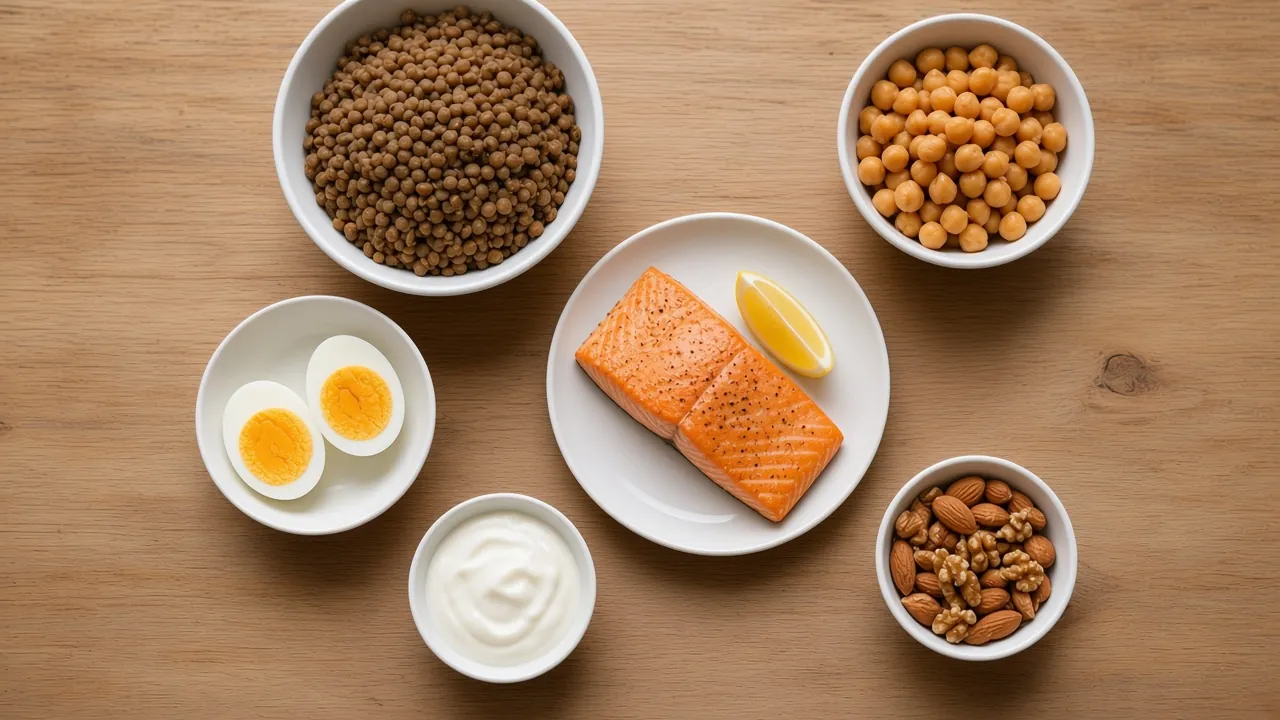
Protein has become one of the most common words on supermarket packaging: "high-protein" yogurt, protein bars, protein powder. Yet most of the protein we eat comes from an ordinary kitchen: lentils, chickpeas, eggs, chicken, fish, cheese, tahini and nuts. In this article we briefly explain what protein is, roughly how much of it you need, why it matters not only how much you eat but also where it comes from, and how to work it into everyday meals without complicating your cooking.
This is general information, not medical or personal nutrition advice. Protein needs vary with age, physical activity, health conditions and your overall diet. People with kidney or liver disease, for example, need to follow their doctor's guidance. For personal advice, talk to a registered dietitian.
What protein is and why your body needs it
According to The Nutrition Source, the nutrition website of the Harvard T.H. Chan School of Public Health, protein is found throughout the body: in muscle, bone, skin and hair. It makes up the enzymes that power many chemical reactions and the hemoglobin that carries oxygen in the blood. MedlinePlus, the medical encyclopedia of the U.S. National Library of Medicine, adds that you need protein to help your body repair cells and make new ones, and that it is especially important for growth and development in children, teens and pregnant women.
Protein is made of small building blocks called amino acids. The body can make most of them itself, but nine, known as "essential amino acids," must come from food. According to MedlinePlus, you don't need to eat all of them at every meal: what matters is the balance over the whole day.
Roughly how much protein you need
Harvard cites the U.S. National Academy of Medicine: the recommendation for healthy adults is a minimum of 0.8 grams of protein per kilogram of body weight per day. For a person weighing 70 kg, that works out to about 56 grams a day. The same academy sets a wide acceptable range of 10% to 35% of daily calories from protein.
Harvard also notes that protein deficiency is uncommon among healthy adults in developed countries, because protein-rich foods are abundant, and that there's no need to go overboard on protein. In other words, for most people the job in the kitchen isn't to pile on protein, but to choose its sources well.
Not just how much, but where from: the protein "package"
Harvard's central idea is that when you eat a food for its protein, you also get everything that comes with it: the type of fat, fiber, sodium and more. A few examples from their table:
- Broiled sirloin steak (about 113 g / 4 oz): about 33 grams of protein, but also about 5 grams of saturated fat.
- Grilled sockeye salmon, same weight: about 30 grams of protein, naturally low in sodium, just over 1 gram of saturated fat, plus omega-3 fats.
- A cup of cooked lentils: about 18 grams of protein and 15 grams of fiber, with virtually no saturated fat or sodium.
According to Harvard, the available evidence indicates that the source of protein, rather than the amount, is what likely makes a difference for health. Their general advice: choose fish, poultry, beans and nuts; limit red meat and cheese; and avoid processed meats such as bacon, hot dogs and cold cuts.
Plant and animal protein
Animal foods (meat, poultry, fish, eggs and dairy) tend to provide "complete" protein, meaning all the essential amino acids. Plant foods often lack one or more of them. The solution, according to Harvard, is simple: variety. People who eat mostly plants can combine different sources over the day, and there are complete plant proteins too, such as quinoa and chia seeds. MedlinePlus puts it plainly: you do not need to eat animal products to get all the protein you need.
Plant sources that are already in most kitchens:
- Legumes: lentils, chickpeas, beans, peas, fava beans, edamame and soy foods such as tofu. Plenty of ideas in our guide to legumes in the home kitchen.
- Nuts and seeds: almonds, walnuts, pistachios, pumpkin and sunflower seeds, and sesame, which means tahini too.
- Whole grains: oats, buckwheat, quinoa, brown rice and bulgur. According to MedlinePlus, whole grains contain more protein than refined products.
And from animal foods, according to Harvard: poultry and seafood are the best bet, eggs can be a good choice, dairy is best in moderation (with yogurt a good part of it), and red meat in small amounts or on special occasions.
How to add protein to meals in practice
- Breakfast: an egg or an omelet with vegetables, yogurt with nuts, or oatmeal with a spoonful of tahini or peanut butter.
- Lunch: fill half the bowl with vegetables and add one clear protein source: lentils, chickpeas, tuna, chicken or tofu.
- Dinner: once or twice a week, swap red meat for fish. A ready idea: tender salmon with hot-oil curing.
- Add, don't just replace: a handful of red lentils in soup, cooked chickpeas in a salad, seeds sprinkled over a stew.
- Check the numbers: to see how much protein is in your dish, use our guide to reading nutrition facts in a recipe.
- Go easy on protein powders: Harvard points out that in the U.S. protein powders, like other dietary supplements, are not regulated by the FDA for safety, and that they may contain added sugars and unexpected ingredients. If you choose to use them, read the label first.
Where KitchenAppes comes in
In the KitchenAppes cookbook you can find dishes built around legumes, fish, eggs and chicken, and keep your favorite recipes in one place. And if half a can of chickpeas, a few eggs and some vegetables are waiting in the fridge, Smart Chef can suggest a recipe from the ingredients you already have at home.
Sources
- Harvard T.H. Chan School of Public Health, The Nutrition Source: Protein
- MedlinePlus (U.S. National Library of Medicine): Protein in diet
KitchenAppes
Download the app