Hot-oil curing for fish: tender salmon without a frying pan
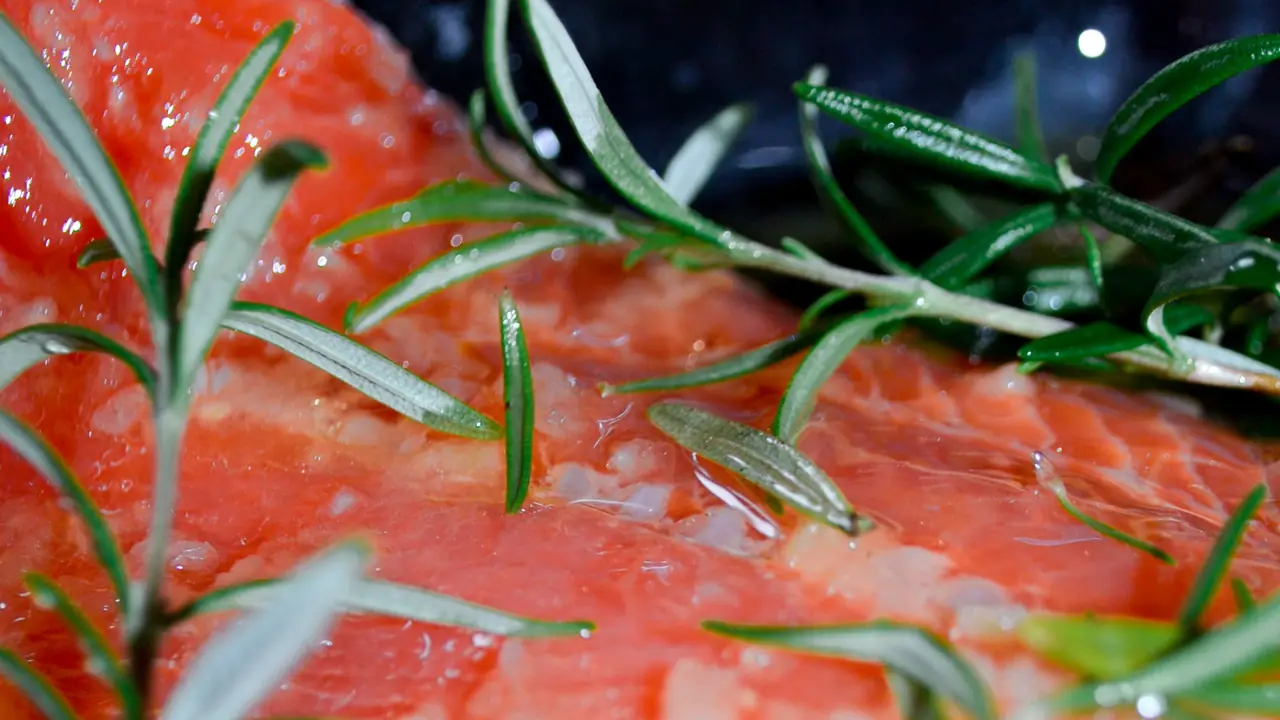
Photo: Andrea Kováčová
Introduction
Hot-oil curing is a technique that combines a short salt cure with oil at a controlled temperature: no pan full of oil and no boiling the fish in a pot. The result: tender slices of salmon with onion, dill and chilli.
This guide is an original KitchenAppes write-up, inspired by a demonstration from the Atilio cooking school, with preparation details also checked against a chef's recipe published on Arutz 7. It is not a copy of the school's lesson.
Important: the dish stays soft and "raw" in texture. There is no promise here that the fish is cooked to a safe temperature the way grilled fish is. If you are pregnant, have a weakened immune system, or are cooking for young children, consult a professional and prefer thoroughly cooked fish. This is not medical advice.
Lesson 1: Slicing
Slice a fresh salmon fillet into pieces about 1–2 cm thick (the Atilio demonstration mentions about 1 cm; the second source about 2 cm. Choose one even thickness).
Lesson 2: Salting
Salt both sides with coarse salt (a dry cure) for about 10–15 minutes. According to the captions of the Atilio demonstration: "a quarter of an hour of salting is plenty". In the Arutz 7 source: 10–15 minutes.
Lesson 3: Rinsing and drying
Rinse gently, preferably by dipping in a bowl of water and changing the water a few times rather than under a strong stream, until the water no longer tastes salty. Pat dry thoroughly with paper towels.
Lesson 4: Aromatics and hot oil
Arrange the slices in a deep dish. Scatter over them (to taste): thinly sliced red onion, hot pepper, dill, and whole spices such as coriander and mustard seeds (black/yellow), and black pepper.
Heat oil to about 63–64 degrees Celsius (use a kitchen thermometer). If you use olive oil, mix it with a neutral oil (for example sunflower) so it stays liquid in the fridge. Pour so that the oil covers the fish and the aromatics.
The temperature comes from a recipe published on Arutz 7 (Netanel Spiegel) and matches the captions of Atilio's reel, which say "sixty-three / sixty-four". Without the full audio of the reel, we do not claim a more exact quote.
Lesson 5: Resting and serving
Leave to rest for at least a few hours; the second source recommends a whole night in the fridge, so the fish softens and the oil takes on the flavours. Serve cold or at room temperature with the onion and herbs from the bowl.
Tips: safety and temperature
- Oil at 63–64° poured over cold slices does not guarantee that the inside of the fish has reached the safe temperature for cooked fish (63° in the centre according to international guidelines for cooked fish). Do not present the dish as "cooked to a safe temperature".
- Keep it in the fridge. For homemade oils with garlic or herbs, CDC guidance talks about refrigerating and throwing out after 4 days; for salmon in aromatic oil, prefer eating it soon rather than storing it for long.
- For raw or lightly cured fish: US regulations require freezing to destroy parasites in certain cases; farmed salmon may be exempt, so check where your fish comes from. There is no Israeli Ministry of Health guidance cited here (none was found in our brief research).
- Hygiene: a clean board, kept separate from other meat.
Common questions
Is this the same cure as salmon in salt and sugar? Not necessarily. Here, after a short salt cure and a rinse, you pour over hot oil at a controlled temperature. Cold cures in salt and sugar (for example gravlax-style) are a different route, with different times and methods.
Can I swap the salmon for another fish? This guide is written around salmon, because that is what the checked source and the demonstration use. There are no checked temperatures or times here for other fish, so do not copy the numbers without a suitable source.
Do I need a frying pan? No. The idea is a deep dish, oil at a controlled temperature and a rest in the fridge: no frying and no boiling.
Where do I keep the steps? In the KitchenAppes cookbook you can save the steps as a personal recipe (in a "Techniques" or "Fish" category) and start a timer for the rest in cooking mode when you make it at home. How a step looks on the screen is described in cooking mode in the app.
Call to action: KitchenAppes
Save the steps in your personal book and make it when it suits you, with a reminder for the rest in the fridge.
KitchenAppes
Download the app