Vitamin C in the Kitchen: Needs, Foods and Cooking Losses
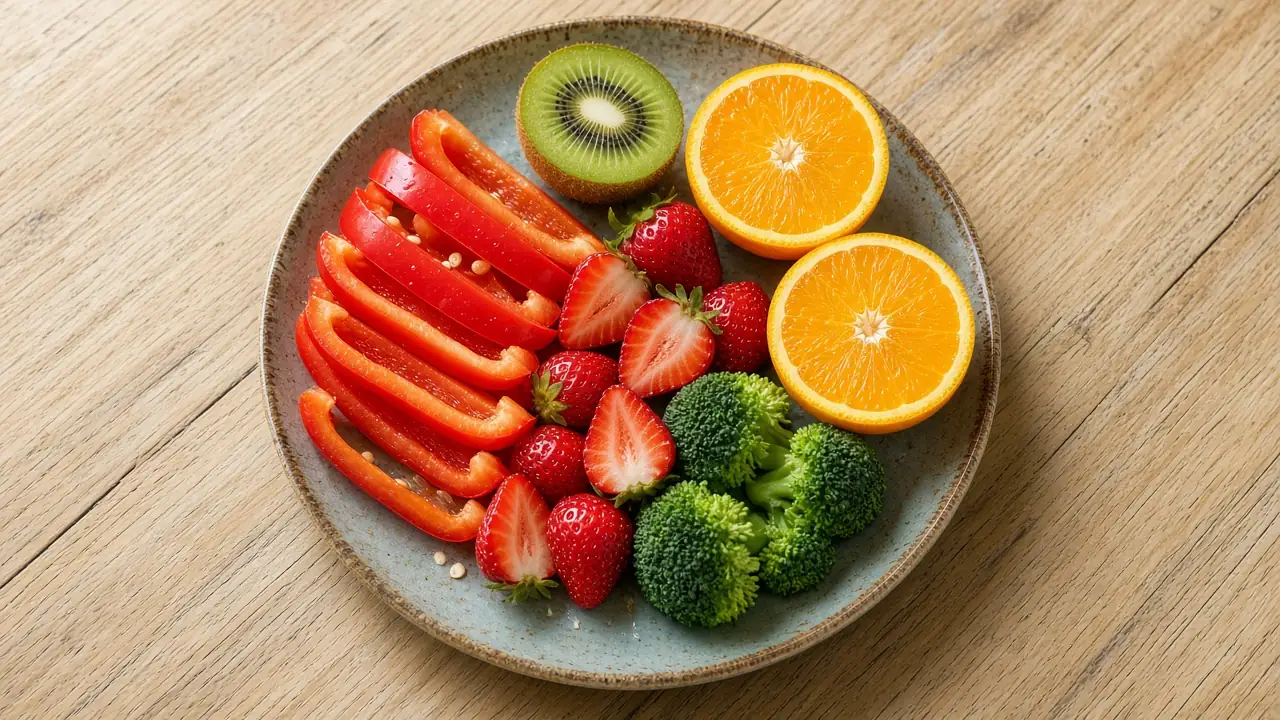
This is general information, not medical or personal nutrition advice. Vitamin C needs vary by age, sex, pregnancy, lactation and health. Before taking a supplement, especially at high doses, talk to a doctor. Too much vitamin C can cause gastrointestinal problems, and in people with hemochromatosis (iron overload) high doses may worsen iron buildup.
Vitamin C, or ascorbic acid, is one of the nutrients people mention most in the kitchen: orange juice, red pepper, kiwi. But how much do you actually need each day? Does cooking "destroy" it? And do supplements help with colds? According to the U.S. National Institutes of Health Office of Dietary Supplements (NIH ODS) and the nutrition website of the Harvard T.H. Chan School of Public Health, the answers are more precise than what you often hear online. This article covers what the vitamin does, how much is recommended, which foods provide it, how not to lose it when cooking, and what the research says about the common cold — without medical cure claims.
What vitamin C does in the body
According to NIH ODS, vitamin C is a water-soluble nutrient found in some foods. In the body it acts as an antioxidant, helping protect cells from damage caused by unstable molecules called radicals. The body also needs vitamin C to make collagen, a protein required for wound healing. In addition, vitamin C improves absorption of iron from plant foods (nonheme iron) and helps the immune system work properly.
Harvard adds that vitamin C plays a role in controlling infections and healing wounds, is needed to make collagen in connective tissue throughout the body, and helps make several hormones and chemical messengers used in the brain and nerves. And according to NIH ODS, humans, unlike most animals, cannot synthesize vitamin C, so it must come from the diet.
According to NIH ODS, most people in the United States get enough vitamin C from foods and beverages. Groups more likely to have trouble include people who smoke and those exposed to secondhand smoke, infants fed evaporated or boiled cow's milk (not recommended under age 1), people who eat a very limited variety of food, and people with certain medical conditions. If you belong to one of these groups, check with a doctor rather than guessing on your own.
How much vitamin C is recommended per day
Recommended daily amounts according to NIH ODS (Consumer fact sheet), in milligrams. For infants through 12 months these are Adequate Intakes (AI), not RDAs:
| Age / life stage | Recommended per day |
|---|---|
| Birth to 6 months | 40 mg (AI) |
| Infants 7–12 months | 50 mg (AI) |
| Children 1–3 | 15 mg |
| Children 4–8 | 25 mg |
| Children 9–13 | 45 mg |
| Teen boys 14–18 | 75 mg |
| Teen girls 14–18 | 65 mg |
| Adult men | 90 mg |
| Adult women | 75 mg |
| Pregnant teens | 80 mg |
| Pregnant women | 85 mg |
| Breastfeeding teens | 115 mg |
| Breastfeeding women | 120 mg |
If you smoke, according to NIH ODS add 35 mg to the values in the table.
There is also a Tolerable Upper Intake Level (UL) — the maximum from all sources combined (food, beverages and supplements). According to NIH ODS:
| Age | Upper limit per day |
|---|---|
| Children 1–3 | 400 mg |
| Children 4–8 | 650 mg |
| Children 9–13 | 1,200 mg |
| Teens 14–18 | 1,800 mg |
| Adults | 2,000 mg |
No UL is set for infants under 12 months. According to NIH ODS, taking too much can cause diarrhea, nausea and stomach cramps. In people with hemochromatosis, high doses of vitamin C could worsen iron overload and damage tissues.
Where to find vitamin C in the kitchen
Fruits and vegetables are the best sources. Selected examples from Table 2 on the NIH ODS Health Professional fact sheet (servings kept in cups as in the source; kosher-friendly choices only):
| Food | Vitamin C per serving |
|---|---|
| Red pepper, sweet, raw, ½ cup | 95 mg |
| Orange juice, ¾ cup | 93 mg |
| Orange, 1 medium | 70 mg |
| Kiwifruit, 1 medium | 64 mg |
| Green pepper, sweet, raw, ½ cup | 60 mg |
| Broccoli, cooked, ½ cup | 51 mg |
| Strawberries, fresh, sliced, ½ cup | 49 mg |
| Brussels sprouts, cooked, ½ cup | 48 mg |
| Grapefruit, ½ medium | 39 mg |
| Potato, baked, 1 medium | 17 mg |
| Tomato, raw, 1 medium | 17 mg |
According to NIH ODS, five varied servings of fruits and vegetables a day can provide more than 200 mg of vitamin C. More on eating a range of colors in our article on vegetables and fruit every day.
How not to lose vitamin C when cooking
According to NIH ODS, vitamin C is water soluble and heat sensitive, so prolonged storage and cooking can reduce the amount in food. Steaming or microwaving may lessen cooking losses. Fortunately, many of the best sources — fruits and vegetables — are usually eaten raw.
Harvard adds: high heat or long cooking breaks the vitamin down, and because it is water soluble it can leach into cooking liquid and be lost if you discard the liquid. Quick methods with little water, such as stir-frying or brief blanching, help preserve it. Peak-ripe food eaten raw generally holds the most.
Practical tips for a home kitchen:
- Cook briefly, with little water.
- Use the cooking liquid (soup, sauce) when you can.
- Cut just before eating, not hours ahead.
- Prefer raw when it fits: pepper salad, fruit at breakfast, a fresh tomato.
A few general ideas, not a medical menu:
- Pepper salad with lemon: sliced red and green pepper, a little green onion, lemon juice and olive oil. Raw, quick, and rich in vitamin C.
- Kiwi and strawberry breakfast: sliced kiwi and strawberries with yogurt or oats — no cooking that would cost vitamin C.
- Broccoli on the side, briefly steamed: a few minutes of steam, not a long boil in lots of water; finish with a squeeze of lemon if you like.
Vitamin C and plant iron
According to NIH ODS and Harvard, vitamin C improves absorption of nonheme iron — the kind in legumes, leafy greens and fortified foods. A simple pairing like lentils with pepper or lemon, or chickpeas with a tomato salad, helps more than taste alone. Full detail on heme and nonheme iron, recommended amounts and what hinders absorption is in our guide to iron in your daily menu. On legumes themselves — see legumes in the home kitchen.
Vitamin C and the common cold: what we actually know
This topic is full of myths. According to NIH ODS (and the Cochrane review summary as presented there), for most people regular vitamin C supplements do not reduce the risk of catching a cold. People who take supplements regularly might have slightly shorter colds or somewhat milder symptoms when they do get one. Taking a supplement after symptoms start does not appear to help.
Harvard summarizes in a similar direction: megadoses of supplemental vitamin C do not prevent colds for the average person; there may be a modest benefit in shortening duration or severity in some groups — but there is no evidence that megadoses prevent colds for most people. We make no claim that vitamin C "cures" or "prevents" disease.
What about supplements?
Briefly, and without a recommendation: we don't recommend any supplement, dose or form. According to NIH ODS, most multivitamins contain vitamin C, and vitamin C is also sold on its own. The usual form is ascorbic acid; there are also sodium ascorbate, calcium ascorbate and other forms. According to NIH ODS, research has not shown that any form is better than the others.
Two caution points from the sources: people being treated for cancer should talk with their doctor before taking vitamin C or other antioxidant supplements, especially in high doses. In one study, vitamin C plus other antioxidants reduced the heart-protective effects of a statin-plus-niacin combination — according to NIH ODS, providers should monitor lipid levels in people taking both statins and antioxidant supplements. Whether you need a supplement at all is a question for a doctor.
Where KitchenAppes fits in
In KitchenAppes you can keep the salads, soups and dishes with pepper, broccoli and fruit that you make again and again in one place and find them when you plan the week. And if you have red pepper, broccoli and kiwi at home with no clear plan, Smart Chef can suggest a recipe from the ingredients you already have.
Sources
- NIH Office of Dietary Supplements: Vitamin C — Fact Sheet for Consumers (Updated March 22, 2021)
- NIH Office of Dietary Supplements: Vitamin C — Fact Sheet for Health Professionals (Updated July 31, 2025)
- Harvard T.H. Chan School of Public Health, The Nutrition Source: Vitamin C (Last reviewed March 2023)
KitchenAppes
Download the app