How Long Do Spices Last? Storage Tips and When to Replace
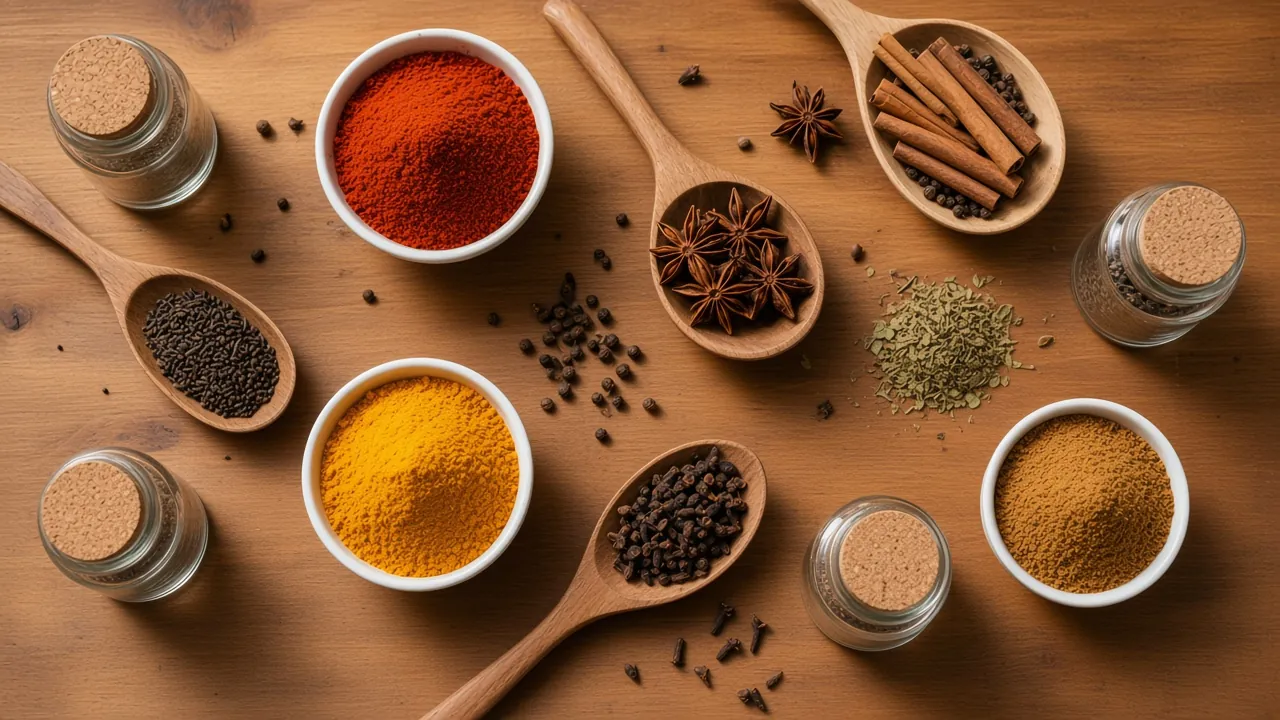
Almost every kitchen has a jar of sweet red pepper powder nobody remembers buying, and cumin that doesn't really smell like anything anymore. Should you throw them out? And where is the right place to keep spices anyway? We gathered the recommendations of two US university extension services: the University of Florida (UF/IFAS) and Texas A&M (AgriLife Extension).
Dried spices don't spoil, they lose flavor
According to the University of Florida, dried herbs and spices never actually spoil, but their flavor and aroma fade over time. Texas A&M also explains that spices don't "go bad" like other foods; they have a period when they're most aromatic and delicious for cooking, and many spices can be used for years past the date on the package.
In other words, the question is usually quality rather than safety: an old spice simply gives less flavor, so you add more and get a worse result.
How long they keep
Both sources give similar ranges, with small differences:
| Type | University of Florida | Texas A&M |
|---|---|---|
| Whole spices (peppercorns, cinnamon sticks) | up to 5 years | 3–4 years |
| Ground spices (ground cinnamon, nutmeg) | 2–3 years | 2–4 years |
| Leafy herbs (parsley, basil, oregano) | 1–3 years | 1–3 years (including most seasoning blends) |
According to Texas A&M, salt and vanilla extract last indefinitely, while other extracts fade after 2–3 years. The simple takeaway: whole spices keep longer than ground ones. If you want a stronger flavor, buy pepper, cumin or coriander whole and grind them just before use.
Where to store them, and where not to
What both sources recommend:
- In tightly closed containers.
- In a cool, dry, dark place, such as inside a cabinet or drawer, and out of sunlight.
- Not above the stove, microwave, dishwasher or refrigerator, and not near the sink or a heating vent. Texas A&M names all of these spots explicitly. If you use an open spice rack, place it away from heat, light and moisture.
- Don't shake them straight over a steaming pot. The University of Florida recommends keeping the jar away from steaming pots while cooking so moisture doesn't get in. It's better to use a dry spoon.
How to tell if a spice is still good
Texas A&M suggests three quick checks:
- Aroma: it should be strong. (Our tip: rub a little between your fingers and smell it.)
- Taste: it should be noticeable.
- Color: it should be vibrant. Faded sweet red pepper powder or dried parsley that has turned gray is a sign it's time to replace it.
A small tip: write the opening date on the jar, so you don't have to guess two years from now.
What about fresh herbs?
The University of Florida suggests freezing them: wash, pat dry, spread in a single layer on a tray in the freezer, and once frozen, move them to an airtight container. After thawing they're limp, so they work best in cooked dishes rather than as a garnish.
How this fits into your weekly menu
An organized spice shelf saves you from buying the same jar twice. Before you build a Shabbat shopping list, take a quick look at your jars and check what's actually missing. In KitchenAppes every recipe shows its full ingredient list, spices included, and Smart Chef can suggest a recipe that uses what's already in your cupboard, even that jar of cumin. If you want to keep all your recipes in one place, see how to keep your recipes in one place.
Sources
- University of Florida, IFAS Extension: Shopping for Health: Herbs and Spices (FS225)
- University of Florida, IFAS Gardening Solutions: Preserving Herbs and Spices
- Texas A&M AgriLife Extension: Storing Dried Herbs & Spices (PDF)
KitchenAppes
Download the app